TL;DR
- There is no single best AI for resume building, and chasing one is the wrong question
- Most AI resume tools fall into three buckets. Generic chatbots, template builders, and keyword stuffers
- Best should mean it works from your real evidence, judges fit honestly, and produces clean readable output
- The output that impresses you in ten seconds is often the output that gets quietly filtered later
- Pick the approach that keeps your claims true and repeatable across roles, not the one with the nicest template
Search for the best AI for resume building and you get a hundred confident answers, most of them written by the tools themselves. Everyone has the best one. Everyone has the smartest engine and the cleanest templates and the highest interview rate that nobody can actually verify.
I think the question is slightly broken. Best AI for resume building sounds like there is a single winner, and that finding it is the hard part. The harder and more useful question is what you want the AI to actually do, because that is what decides whether your resume gets read or filtered.
There is no single best tool, and that is fine
A resume is not a design problem you solve once. It is an argument you make again and again for different roles, and the useful AI is the one that helps you make that argument honestly and quickly.
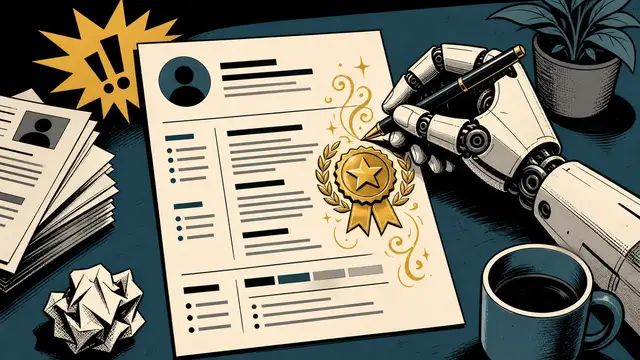
The tool that produces the most impressive-looking draft in ten seconds is often the one that produces the draft most likely to get quietly binned. Recruiters have now seen thousands of AI resumes. Polished, generic, slightly inflated writing is not a differentiator any more. It is a warning sign.
So instead of asking which tool is best, it is worth knowing what kind of tool you are actually looking at.
The three kinds of AI resume tools you will meet
Most of what gets marketed as AI resume building falls into one of three buckets, and they fail in different ways.
- Generic chatbots. Flexible and fast, but they see almost nothing of your real career and tend to fill the gaps with confident guesses. Great for a quick rewrite, weak as a foundation.
- Template builders. They give you a tidy layout and drop AI text into the boxes. The design looks professional, but the writing is often generic and the fancier templates can confuse applicant tracking systems.
- Keyword stuffers. Tools that promise to beat the ATS by cramming in terms from the job description. They can lift a match score while making the resume read like it was written for a machine, which is exactly what a human reviewer notices.
None of these is evil. They are just built to optimise for the wrong thing, which is usually a polished-looking output rather than a defensible application.
What best should actually mean
If I am judging an AI resume tool, I care about a short list of things, and none of them is the template gallery.
- It works from your real evidence. The tool should build from a genuine record of what you have done, not improvise from a two-line prompt. Real material in means fewer invented claims out.
- It helps you judge fit. A useful tool will sometimes tell you a role is a weak match, so you do not spend an hour tailoring for a job you will not get. Flattery is not a feature.
- It keeps you honest. It should surface your experience clearly without inflating scope or seniority into something you cannot defend in an interview.
- It produces clean, readable output. Single column, standard headings, parseable by an applicant tracking system, and easy for a tired recruiter to skim.
- It is repeatable. You should be able to tailor for the next role without starting from zero every time.
Notice that most of these are about discipline, not cleverness. Harvard’s resume guidance makes the same distinction by treating generative AI as useful for editing and keyword work, while warning that it should not become the primary author of the document. Their dedicated page on AI for resumes and cover letters frames the tool in the same constrained way: useful for prompts, comparisons, and revisions, not for outsourcing judgment. The best AI for resume building is the one with the most useful constraints, not the one with the loosest imagination.
The test I would run before trusting any tool
Before I relied on any AI resume tool, I would check three things quickly.
First, does it start from my real experience or from a blank box? If it can only work from what I paste in the moment, it will invent the rest. Second, will it ever push back? A tool that rates every role as a great fit is optimising to please me, not to get me interviews. Third, does the output sound like a person? If the draft reads like every other AI CV, it has already lost the one advantage a real candidate has.
If a tool fails those three, a nicer template will not save it. If it passes them, the specific brand matters a lot less than the marketing wants you to think.
Where OutRung sits in this
I will be honest about the bias here. OutRung is built around exactly the principles above, because I got tired of tools that produce a great first impression and a weak application.
The idea is that you keep one master profile of your real career, and the AI mostly selects and refines from that trusted material rather than inventing from scratch. It helps you score how well a role actually fits before you write anything, supports a tailored CV built from verified evidence, and keeps your applications organised so tailoring for the next role is faster. The ATS score checker now checks the finished CV against the job description and shows how many keywords are covered and which are missing. The point is not the AI writing your resume. It is the AI doing the boring, repeatable parts while your real experience stays in charge of the facts.
You do not have to use it to take the underlying idea. Any tool that keeps you anchored to real evidence and honest about fit is doing the job better than one that just writes confident prose.
The honest takeaway
The best AI for resume building is not a name. It is a set of behaviours. Works from your real experience, tells you the truth about fit, keeps your claims defensible, and produces something clean enough for both a parser and a person.
Chase the tool with the flashiest output and you will probably ship a resume that looks great and lands nowhere. Chase the approach that keeps you honest and repeatable, and the specific tool becomes a much smaller decision. Ask what you want the AI to do, not which logo is winning this month.
Related questions
There is no single best tool, because the label hides the thing that actually matters, which is how the AI is allowed to work. The best approach for interviews is one that builds from your real experience, helps you judge whether a role fits, and produces clean output you can defend, rather than one that generates impressive text from thin context.

About the author
Tian
Tian is an AI professional, builder, and the founder of OutRung. Holding a PhD in deeptech, Tian navigated the frustrating modern job market first-hand before transitioning into the AI space. OutRung was built to share the exact strategies that made that transition successful. Tian's goal is to help everyday job seekers use AI to find their ideal roles efficiently, without needing to be computer experts themselves.