TL;DR
- AI can rewrite your resume, and it is genuinely good at structure, tightening bullets, and cutting fluff
- It is dangerous when it invents scope, inflates your seniority, or flattens your voice into generic filler
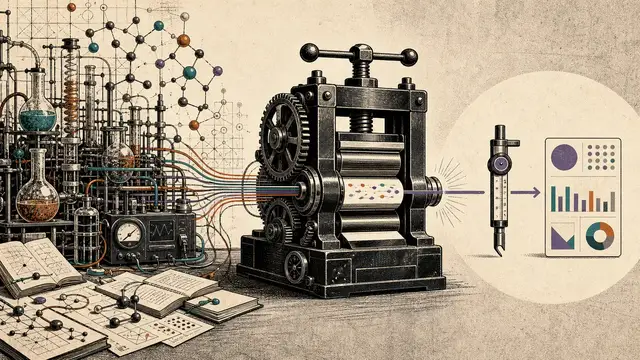
- The rule that keeps it usable is simple. Rewrite from real evidence, never from nothing
- Let AI select and polish what is already true, and keep the judgment about fit and honesty with you
- Every rewritten claim needs to survive an interview, so treat AI output as a draft to verify, not a truth to trust
Can AI rewrite your resume? Yes. Easily. You can paste a tired CV into almost any model, ask it to rewrite the thing, and get back something that reads more smoothly in about ten seconds.
The honest question is not whether it can. It is whether the version it hands back still sounds like you, still holds up in an interview, and still says something true. That is where most people get burned, so it is worth being clear about what AI is actually good at here and where it quietly ruins your application.
The short answer, and the catch
AI is a capable rewriter. It is a poor author of a career it has never seen.
Give a model a rich, honest picture of what you have done and a specific job to aim at, and it can genuinely sharpen your resume. Give it two lines and a vague prompt, and it will fill the gaps with confident guesswork. Even LinkedIn’s AI-powered resume tips warn that AI suggestions can be inaccurate and need checking. The output looks the same at a glance. It is not the same at all, and a good recruiter can usually feel the difference.
So the useful framing is not can AI rewrite my resume. It is what am I giving it to rewrite from.
What an AI resume rewriter is genuinely good at
Used well, an AI resume rewriter takes real work off your plate. It is strong at the mechanical parts of writing that most of us are slow and inconsistent at. If your request is simply “rewrite my resume”, this is the useful part of what the tool should do.
- Tightening bullets. It can turn a rambling three-line responsibility into one clear sentence that leads with the outcome.
- Cutting fluff. It is good at spotting the filler words and empty phrases that pad a CV without adding proof.
- Restructuring. It can reorder sections, group related work, and impose a consistent shape across roles that you wrote years apart.
- Matching language. Given a job description, it can align your wording with the terms the advert actually uses, which helps with both human readers and applicant tracking systems.
None of that is inventing anything. It is editing, and editing is exactly the kind of repetitive, fiddly work that a machine should help with. Pitt Career Central’s guide to using AI to enhance your resume frames the same boundary well: use AI to improve the material, then keep responsibility for the final claims.
Where it quietly wrecks your resume
The trouble starts when the model runs out of real material and keeps going anyway. It does not stop and say it does not know. It smooths over the gap.
That is when a supporting task becomes a headline achievement. When helped with a migration becomes led the migration. When a skill you touched once becomes a core strength. The exaggeration is rarely a bold lie. It is a slow drift in scope and seniority that you might not even notice, because it is flattering and it reads well.
The other failure is voice. Generic AI writing has a smell. Too many tidy leadership verbs, too much symmetry, the same spearheaded and leveraged and drove strategic impact that thousands of other rewritten CVs now carry. Once your resume sounds like everyone who used the same tool, you lose the one thing that actually helps, which is the sense that a real person did real work.
I have written more about why generic chatbots struggle with this, but the short version is that flattery and thin context are a bad combination on something a hiring manager will scrutinise.
The rule that keeps it honest
There is one rule that separates a helpful rewrite from a fake one. Rewrite from evidence, never from nothing.
If a claim is not grounded in something you actually did, it does not belong in the resume, no matter how good the sentence is. The model’s job is to express your real experience more clearly, not to imagine a better version of you. The moment you let it freestyle from a blank context, you are back to polished fiction.
This is also why a resume rewrite works best when it starts from a proper record of your career rather than a two-paragraph prompt. The more true material the tool has to select from, the less it needs to invent.
A workflow I actually trust
When I use AI on a resume, I keep the judgment with me and give the machine the mechanical parts.
- Start from a trusted record. Keep your real achievements, projects, and metrics in one place, so any rewrite is drawing from fact.
- Pick the evidence first. Before asking for a single rewritten line, decide which experience matters for this specific role. Selection is a human decision.
- Then ask for the rewrite. Let AI tighten, reorder, and align the wording of material that is already true.
- Read it as a sceptic. For every line, ask whether you could defend it in an interview without wincing. If not, cut it.
- Keep the format under control. Make sure the final document is clean and readable, and check it will survive ATS screening before you send it.
That is the logic behind how OutRung handles this. Instead of asking a blank text box to improvise, it works from your master profile, helps you judge how well a role fits before you write anything, and supports a tailored CV built from verified material. The AI mostly selects and refines. It does not get to invent your career.
The honest takeaway
Can AI rewrite your resume? Yes, and it can genuinely make it better. It can also make it worse in ways that are hard to spot until a recruiter quietly bins it for sounding like every other AI CV in the pile.
The difference is entirely in what you feed it and how much you trust it. Give it your real evidence, keep the decisions about scope and fit for yourself, and use it last for polish rather than first for invention. Do that, and AI is a fast, useful editor. Skip it, and you have automated your way into a resume you cannot defend.
Related questions
Yes. AI is capable of restructuring a resume, tightening bullet points, cutting filler, and matching the language of a job description. It works best when you give it real material to work from and treat its output as a draft you check, rather than a finished document you trust blindly.

About the author
Tian
Tian is an AI professional, builder, and the founder of OutRung. Holding a PhD in deeptech, Tian navigated the frustrating modern job market first-hand before transitioning into the AI space. OutRung was built to share the exact strategies that made that transition successful. Tian's goal is to help everyday job seekers use AI to find their ideal roles efficiently, without needing to be computer experts themselves.