TL;DR
- The same three problems show up on nearly every coaching call. The CV describes the job instead of the person, the target roles are two steps away from the evidence, and silence gets read as a verdict on the candidate rather than on the top of the funnel.
- Each one has a fix you can do in an evening. Rewrite each role as evidence a hiring manager would repeat, pick the three roles where your last two years are the obvious answer, and stop applying to stale or oversubscribed posts.
- You can now book the free 15-minute call directly from the coaching page instead of emailing first. Paid sessions and the programme are agreed on that call.
- Every half hour of session time now comes with a month of OutRung with raised limits, worth about £20 a month. Programme clients get two months at the highest tier, worth about £40 a month. It costs me almost nothing and it means the actions from each call actually get done between calls.
A few weeks ago I put a coaching page on this site and told almost nobody. I was half expecting it to sit there. Career coaching is an industry with a lot of confident people selling a lot of nothing, and I did not want to add to that pile.
People booked anyway. More than I expected, and from exactly the groups I had in mind, PhDs trying to get out of the lab, international graduates trying to get in anywhere, and engineers and researchers trying to move into applied AI and forward deployed engineer roles. So here is what I have learned from the first batch of calls, and two changes I am making because of them.
The same three problems, nearly every call
I thought every search would be its own strange mess. Mostly they are not. Three things come up so often that I now check for them before the call starts.
The CV describes the job, not the person
This is the big one, and PhDs are the worst for it. The CV lists techniques, instruments, responsibilities and projects, and a hiring manager reads it and learns what the role was, not what you did with it. “Responsible for data pipeline” tells me the pipeline existed. It does not tell me you cut a weekly run from six hours to twenty minutes and nobody has touched it since.
The fix is dull and it works. For each role, write one line of evidence that a hiring manager could repeat to a colleague without looking at the page. If they cannot repeat it, it is not evidence yet. Most people need three or four of those lines, not twenty bullets. If you want a longer version of this, the piece on what to bold on your CV is about the same instinct.
Right candidate, wrong target
The second pattern is people applying to roles that are two steps away from anything their CV proves, then concluding that the market is dead. The market is hard, I am not pretending otherwise, but a lot of the silence I see is aimed at roles the candidate was never a plausible answer for.
Here is the question I ask on nearly every call. If someone read only the last two years of your CV, what job would they say you obviously do next? That is your first target. Not the dream role, not the role your friend got, the obvious one. Pick the three roles where your recent evidence is the clearest answer and go after those first, properly, with a tailored CV each time. Once interviews start happening you earn the right to stretch.
Silence is a signal about the funnel, not about you
The third pattern is emotional more than tactical. After enough rejections, people start reading every silence as a verdict on their worth. It almost never is. Most of the time it is a verdict on the top of the funnel. The post was ten days old with two hundred applicants, it was an Easy Apply role drowning in low-effort CVs, or the CV was the same one sent to everything else.
I wrote about this before in stop applying to oversubscribed and old job posts, and the calls have only made me more certain. Timing and applicant count are decision signals. Use them, apply to fewer things, and the silence shrinks.
For international graduates there is a fourth thing, which is the sponsorship question nobody explains honestly. It deserves its own post. The short version is that it changes which companies are worth your time far more than it changes your CV, so sort the target list first.
What a session actually looks like
The first 15 minutes are free, on video, and there is nothing to prepare. You tell me where you are and where you want to be, I tell you honestly whether I can help. Sometimes the honest answer is that you do not need coaching, you need to fix one thing and send ten good applications, and I say so.
If it is worth going further, a strategy session is 30, 60 or 90 minutes depending on the problem. Half an hour is enough to take a CV apart against one role you actually want. Longer is for rethinking the whole search. Either way you get written action points afterwards, so the call does not evaporate by Thursday. Sessions can be in English or Mandarin, and there is a Chinese version of the page too.
Two changes
Now that I know people actually want this, I am making it easier to start, and more useful once you have.
You can book the free call directly. Until now every button on the coaching page opened an email, because I wanted to talk to people before taking money. I still do, but the email step added a day of back and forth for everyone. From today you can pick a slot for the free 15-minute call straight from the page, and if a paid session or the programme is the right next step we agree it on that call. Email and RedNote still work if you would rather say hello first.
Every half hour of session time comes with a month of OutRung with raised limits. OutRung is free, with a fair-use cap on the AI work behind scoring, tailored CVs and interview prep. Most people never get near it. Coaching clients are different. They leave a call with a list of roles to score and a CV to rebuild, and they go and do it that evening, which is exactly the behaviour the cap was never designed for. So after a paid session I raise the cap on your account, a month for each half hour you booked. A 60-minute session gets you two months. If I ever charged for that tier it would be about £20 a month. Programme clients get two months at the highest tier instead, the sort of allowance that would be nearer £40 a month, covering the four weeks and the month after.
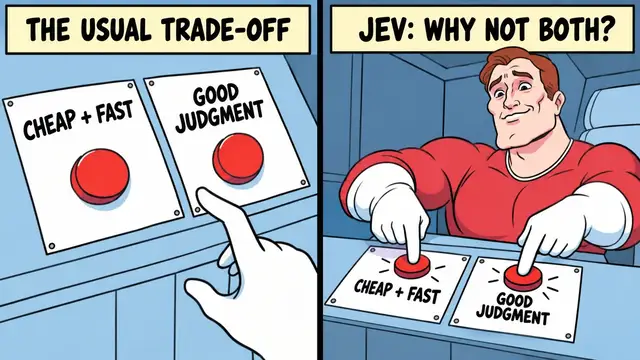
I want to be straight about what this is. It costs me very little, so it is not a discount in disguise. It is the tool doing the legwork between calls so that the call time is spent on judgement, which is the only part that genuinely needs a human.
Who should not book
If your CV already reads as evidence, your targets are the obvious next step, and you are getting interviews but not offers, a session will not change much. Spend the money on a mock interview instead, or use the one built into OutRung.
If any of the three patterns above sounded uncomfortably familiar, book the free call. Fifteen minutes, no preparation, and I will tell you which of the three it is.
Related questions
PhDs and researchers moving into industry, international students and graduates breaking into the UK market, and engineers and scientists moving into applied AI and forward deployed engineer roles. Sessions can be in English or Mandarin.

About the author
Tian
Tian is an AI professional, builder, and the founder of OutRung. Holding a PhD in deeptech, Tian navigated the frustrating modern job market first-hand before transitioning into the AI space. OutRung was built to share the exact strategies that made that transition successful. Tian's goal is to help everyday job seekers use AI to find their ideal roles efficiently, without needing to be computer experts themselves.