TL;DR
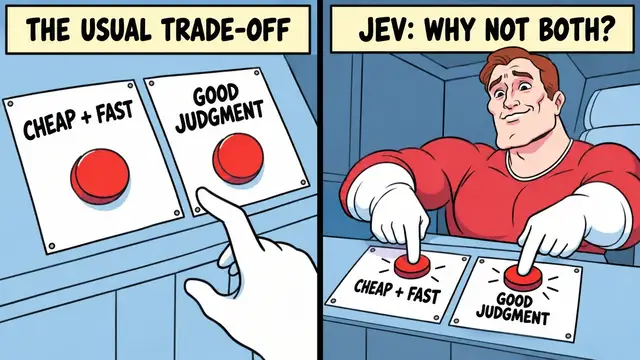
- A one click tool can generate a CV quickly, but it cannot create the judgment and source material that a serious application needs.
- A strong master CV, experience library, and cv writing guide give OutRung the context it needs to produce better tailoring.
- The easy parts of writing a cv are contact information, layout, and bullet points. The hard part is choosing the right evidence for the role.
- The system improves over time because each new job posting gives you another chance to refine your profile, scoring, and application workflow.
There is a reason OutRung does not pretend it can hand you a perfect CV after one click.
If you have spent any time on a normal job board, you will recognise the promise. Paste in an old CV, let the machine generate a CV, then fire it at the next dream job before the new job posting goes cold. It sounds efficient. It usually produces the same thin result everyone else is sending.
OutRung makes you do the work because better tailoring starts with better source material. If you have never built a proper master CV, this is the whole point.
Why a master CV matters
Most tools look at one resume template, scan for similar job titles, and guess what kind of candidate you must be. That is fine if your work history is simple. It falls apart fast if you have done complicated, messy, real work that does not fit neatly into a single label.
If you give AI almost nothing to work with, you get almost nothing useful back. You get generic phrasing, safe bullet points, and a CV that could belong to anyone with vaguely similar job titles.
The problem is not that AI is bad at writing. The problem is that AI does not know you. It does not know that you led a migration project under ridiculous time pressure. It does not know that you left a comfortable role because you wanted harder problems. It does not know that your best work happened in a job that barely shows on LinkedIn or social media.
No model knows any of that unless you tell it.
Context is everything
This is the core design philosophy behind OutRung. We ask for more upfront because the context matters more than the formatting.
The easy parts of writing a CV are not the valuable parts. Contact information, reverse chronological order, clean headings, and easy to read bullet points are table stakes. Potential employers expect that. Applicant tracking systems expect that. You can copy that structure from almost any decent CV template. The National Careers Service guide to CV sections covers the same basics, which is exactly why structure alone is not the interesting part.
The harder part is deciding what evidence belongs on the page for this role, what belongs in the supporting profile, and what should stay out. That is where most job seekers struggle, especially in a rough job market where every decent role attracts too many job applications.
So yes, the onboarding is effort. Upload the CV from three years ago. Add the version you wrote for that sector switch. Include the one that captured a project you have since forgotten to mention. The more honest source material you feed in, the better your AI CV builder and CV tailoring workflow become.
The experience library, scoring criteria, and writing guide
Three things OutRung relies on heavily, and all three are user-generated.
Your experience library is the collection of achievements, projects, and responsibilities you have built up. This is not something we auto-generate from a job title. You write it or refine it from your uploaded CVs. It is yours.
Your scoring criteria define what actually matters to you in a role. Not what a job board thinks matters. Not what is trending. What you care about. Location, tech stack, seniority, team size, type of problem, sector. You set this, and it drives how jobs get ranked for you. For some people that also includes whether a role offers sponsorship. OutRung does not currently verify sponsorship, so check the listing and confirm the requirements with the employer before spending time on the application.
Your cv writing guide tells the system how you like to sound. Formal or direct. Dense or spacious. Heavy on metrics or more narrative. This is the difference between a generated CV that sounds like you versus one that sounds like a LinkedIn influencer wrote it. Prospects makes a similar point in its AI, CVs and applications guide, which keeps coming back to the need for specific source material and human judgement instead of letting the tool improvise.
None of these work well if you leave them empty or half-done. That is why OutRung makes you do the work instead of pretending it can infer your whole career from one upload.
It’s an iterative process
Here is what I would honestly expect from the first few days. You will score some jobs and the results will be mostly right but not perfect. You will generate a CV and parts of it will feel slightly off. A phrase here. A missing detail there.
That is fine. That is how it is supposed to work.
You go back, adjust your scoring criteria, add a missing project to your experience library, tweak the writing guide. Next time, it is closer. After a week or so, the platform genuinely starts to represent you. Not a generic version of someone with your job title. You.
This mirrors how any good process works. Iterative refinement produces better outcomes than trying to get everything right first time. The difference is that OutRung keeps what you have built. You are not starting from scratch every time you see a new job posting.
Why not just make it one click?
Because one-click tools produce AI slop.
If you are a senior engineer or a solution architect with 10 or 15 years of complex experience, a one-click tool is going to flatten you into something unrecognisable. Your career does not fit a template. It should not be squeezed into one.
It also trains bad behaviour. It nudges people to chase volume, spray job applications across every board, and mistake activity for progress. That is not a better job search. That is just more admin with shinier wording.
The effort you put into OutRung materialises as better job matches, stronger applications, and less wasted time applying to roles that were never right for you. If you want a clearer sense of how the draft reads for both humans and applicant tracking systems, that review step matters just as much as the initial draft.
Practical tips if you’re getting started
- Upload at least two or three versions of your CV during onboarding. Older ones are valuable. They contain projects and phrasing you’ve probably dropped.
- Spend real time on the career motivation questions. Do not rush them. They inform how jobs get scored for you.
- Treat the first round as a calibration exercise, not a finished product. After your first few job scores and generated CVs, go back and refine.
- Update your experience library whenever you remember something you’ve left out. It compounds over time.
- Be specific in your writing guide. “I prefer direct language and short sentences” is more useful than leaving it vague.
- Track each role worth pursuing in one place. A job application tracker is far more useful than trying to remember which version you sent to which company.
- Do not obsess over the fantasy of a perfect CV. Focus on a truthful, role-specific document that is easy to read, easy to defend, and useful for this application.
The payoff
After a week or two of genuine engagement, you should have a system that knows your career deeply, scores roles against what you actually want, and generates CVs that sound like you wrote them on a good day. Not a magic trick. A well-fed, well-calibrated tool that rewards the work you put in.
That matters whether you are searching in the UK, the United States, or anywhere else that has turned the hiring process into a numbers game. The mechanics change a bit. The underlying problem does not.
That is the trade-off. And I think for anyone serious about their next move, it is worth it.
A master CV is more work upfront. It is also the reason the later tailoring gets faster, more accurate, and much less generic. If OutRung sometimes feels like it is asking a lot, that is because it is trying to help you do the work that actually matters.
Related questions
Because a master CV gives the system real source material. Without clear work history, achievements, and preferences, any generated draft becomes generic very quickly.

About the author
Tian
Tian is an AI professional, builder, and the founder of OutRung. Holding a PhD in deeptech, Tian navigated the frustrating modern job market first-hand before transitioning into the AI space. OutRung was built to share the exact strategies that made that transition successful. Tian's goal is to help everyday job seekers use AI to find their ideal roles efficiently, without needing to be computer experts themselves.